Remote visual inspection (CVAD): the guide to hybrid inspections
Can remote visual inspection make inspections faster and more reliable without weakening fieldwork? French energy renovation already says yes: the legislator has opened the way to photo and video inspection for works funded by energy savings certificates (CEE). This guide covers remote visual inspection, known in France as CVAD: definition, process, legal framework, figures, a heat pump example, limits and how to choose a solution. With one conviction: remote inspection does not abolish site visits, it abolishes unnecessary trips, provided it relies on certification technology.
Key points in 30 seconds
- For a check that only requires a look, an on-site visit is no longer necessary: a certified photo provides the same information.
- On-site inspection does not disappear: it remains essential for measurements, tests, areas that cannot be filmed and a sample of files.
- Remote inspection increasingly relies on self-service capture: without certification at capture, a photo of a screen or of another site can slip through.
- Certificall certifies every photo and video at capture, giving inspectors and AI analysis tools clean, traceable and legally enforceable data.
Remote visual inspection: definition and formats
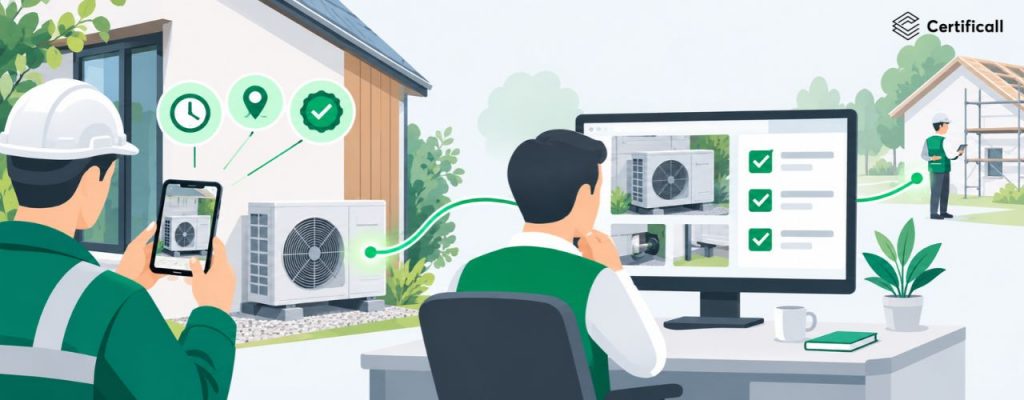
Remote visual inspection is a compliance check based on photos, videos or a video call captured on site, then analysed by an inspector who does not need to travel every time.
Depending on the sector, it is also called remote inspection, remote audit or virtual inspection. It is not a single format but a range, chosen according to the risk of the file, the complexity of the equipment and the value of the funding involved.
| Format | Typical use | Certificall price |
|---|---|---|
| Certified photos | Check a piece of equipment, a label, a rating plate, a distance | €1 excl. VAT per photo, €0.56 to €0.75 excl. VAT with a subscription |
| Continuous certified video | Prove a number of units, a cable route, a working demonstration | €3 excl. VAT per video |
| Video-call inspection | Inspection guided live by the inspector, for complex or high-risk files | €5 per unit, with about twenty certified photos captured during the call |
All plans are listed on our certified photo pricing page. For comparison, an on-site inspection costs €200 to €400 on average in the French CEE scheme.
How a remote visual inspection works
A remote inspection always follows the same logic, whatever the sector. Each step must be controlled, because the final decision is only as good as the evidence behind it.
The six steps of a remote visual inspection
- Define the checklist. The inspector sets the list of expected shots, point by point.
- Send the link. The person on site receives a secure link, such as CertiLink, with no account to create.
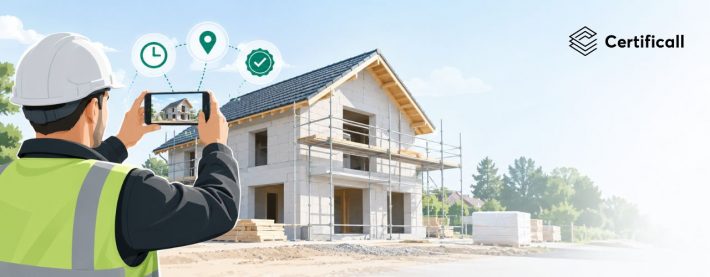
- Capture and certify. Each photo or video is taken in the app, time-stamped, geolocated and sealed.
- Analyse. A domain-specific AI flags anomalies and the Trust Score rates the reliability of the file.
- Decide. The inspector approves, requests more evidence or triggers a site visit.
- Archive. The certified file is kept and remains enforceable if challenged.
The CertiLink secure link lets an installer, a beneficiary or an operator capture certified evidence without installing anything beforehand.
The legal framework for remote visual inspection
In France, energy savings certificates are the first regulated field for remote visual inspection. Law no. 2025-594 of 30 June 2025 against fraud in public aid strengthens CEE inspections, including through remote visual inspections where appropriate. It also provides that certain operations defined by ministerial order are verified through time-stamped and geolocated photographs or remote videos.
The framework keeps evolving. An order of 27 July 2026 revised the CEE inspection procedures, and the public programme PRODICEE includes a workstream on implementing remote visual inspection. Our article on remote visual inspection of CEE works (in French) details these texts.
Across all sectors and member states, the evidential value of a capture rests on the eIDAS Regulation. Article 41 gives a qualified electronic time stamp a presumption of accuracy of the date and of integrity of the data. Article 35 gives a qualified electronic seal a presumption of integrity and correctness of origin of the data. These qualified services are recognised in all EU member states. Our article on why a photo alone proves nothing explains the difference this makes in a dispute.
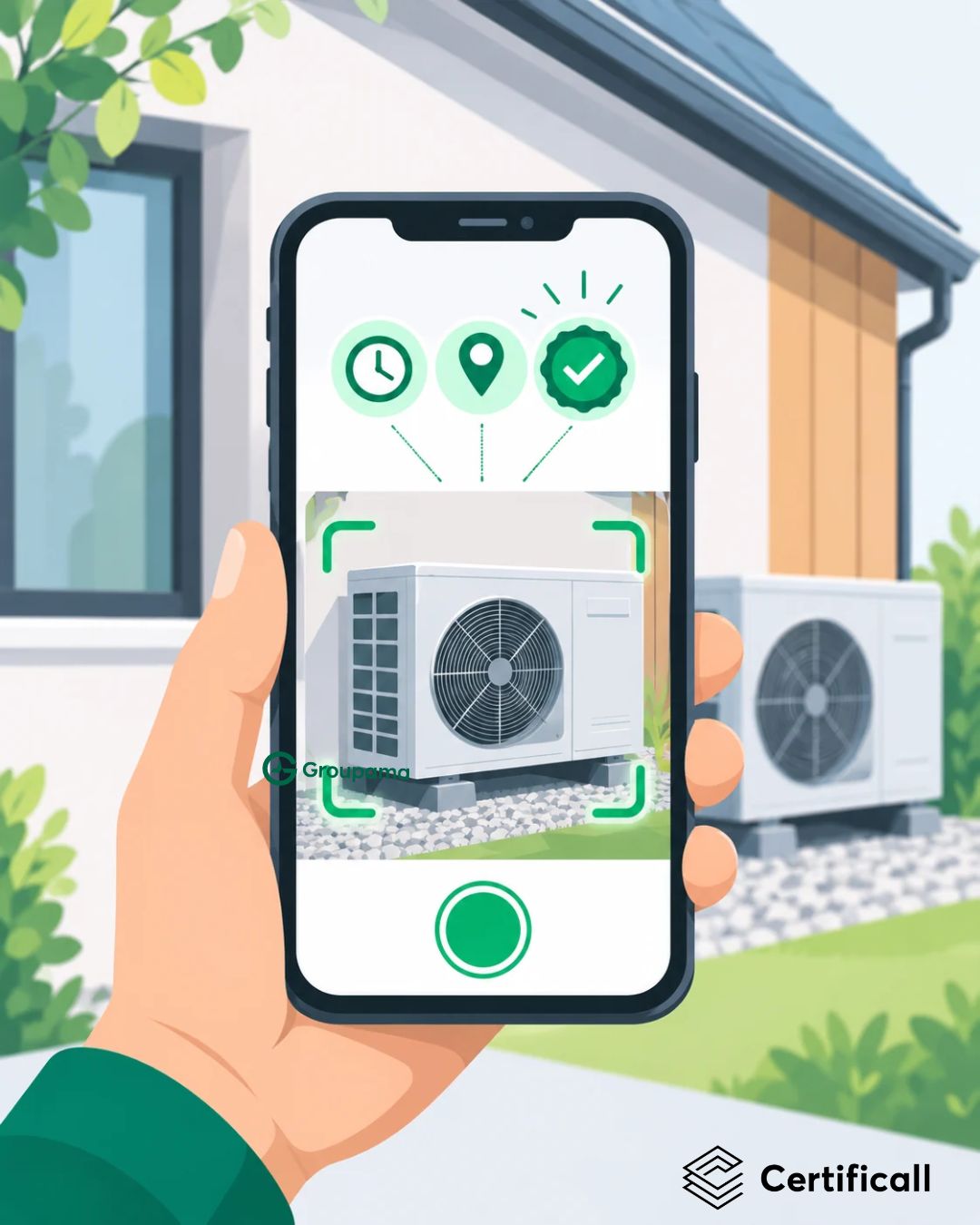
The trust chain of remote inspection
A remote inspection is only as reliable as the image it is based on.
Certificall secures every step, from capture to decision:
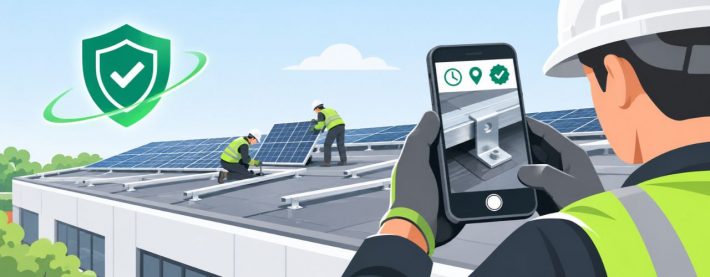
- Capture : in the app, with no import from the gallery, and reinforced geolocation
- Sealing : qualified time stamp and qualified eIDAS electronic seal at the moment of capture
- Analysis : domain-specific AI and Trust Score before the inspector’s decision
A structural shift: inspection is becoming hybrid
The Covid crisis acted as an accelerator. Food safety authorities, certification bodies and regulators had to inspect without travelling. The Codex Alimentarius has since adopted principles and guidelines on remote audit and inspection. It is no longer a crisis workaround but a regulated practice.
The OECD analysed these practices in a 2023 report on remote audits for international food safety. It highlights clear benefits: lower travel costs, a smaller carbon footprint and more flexible use of experts’ time. It also notes the limits: harder evidence gathering, heavier preparation and dependence on connectivity.
Professionals are clear. In the OECD survey, more than 70% of auditors considered fully remote audits less effective than on-site visits, while hybrid audits were welcomed. Remote inspection wins when it complements fieldwork, never when it claims to replace it.
The figures from French energy renovation
Energy savings certificates fund energy efficiency works for households and businesses in France. The French Senate estimated CEE fraud at €280 million for 2023 alone, while on-site inspections only cover part of the files. The sector needed to inspect more, faster and better.
In an opinion piece published in July 2025, Florence Lievyn, then president of GPCEE, the French association of energy savings certificate professionals, cited a study by an accredited inspection body covering 50 sites inspected twice, remotely and on site. She also reported several thousand sites already inspected remotely.
94%
of anomalies found on site
were already visible on the photos of the remote inspection.
€30
per remote inspection
on average, against €200 for an on-site inspection according to the article.
÷ 20
carbon footprint
as nobody has to travel to the site.
These figures match those of AMORCE: its practical CEE guide, produced with the French environment agency ADEME, puts the average cost of an inspection at about €400, depending on the type of operation, the floor area or the volume of insulation. Depending on the purpose of the inspection and travel, an on-site visit therefore costs €200 to €400 on average.
« Remote visual inspection does not lower the bar: it raises it. »
Florence Lievyn, then president of GPCEE, opinion piece published in July 2025 (translated from French)
Certificall is among the remote visual inspection providers already deployed on CEE works cited in that article.
Example: inspecting a heat pump in 9 points
Installing a heat pump in a private home is the use case where Certificall is used the most. Here is a typical inspection checklist, each step captured and certified in the app.
| Step | Item inspected | What the certified photo shows |
|---|---|---|
| 1 | Customer reference | Name and address of the works, matched against geolocation |
| 2 | Distance between outdoor unit and wall | The 20 cm clearance, visible on a side view |
| 3 | Unit mounting | Installed on a concrete base or on a wall bracket |
| 4 | Backflow preventer | Presence of a type CA backflow preventer |
| 5 | Emergency stop switch | Electrical isolation device |
| 6 | Balancing valve | Presence of the balancing valve |
| 7 | Pipe insulation | Insulation of the existing circuit, except cold water pipes or heated rooms |
| 8 | Controller | Presence and installation of the controller |
| 9 | Removal of the old boiler | Removal of the oil or gas boiler, proven on the day of the works |
Each of these points can be checked by eye. None requires an electrical measurement or a test that only physical presence would allow. The removal of the old boiler is even better proven by a photo taken on the day of the works than by a visit months later, when there is nothing left to see. Our guide to inspecting a heat pump installation (in French) details the shots.
What remote inspection replaces, what the site visit keeps
Let us be clear: for a check that only requires a look, an on-site visit is no longer necessary. Checking that a unit is installed, that a label is present, that a clearance is respected: a certified photo provides the same information, with an indisputable date and place. Sending a technician for that ties up half a day and a car without adding anything to the finding.
What the site visit keeps
Physical measurements, tests, hidden or unfilmable areas, behaviours that depend on an external event, the conversation with the beneficiary, and a sample of visits that keeps standards high across all files.
What remote inspection replaces
Low-value trips: pre-qualifying a file, visually checking a standard installation, returning to clear a defect, a follow-up inspection after a missing document.
On-site inspection cannot be removed entirely. As a matter of principle it probably should not be, even where regulations do not require a physical visit. The GPCEE article also notes that 10% of non-conformities were only visible remotely, because they were no longer accessible after the works: the two approaches complement each other.
For inspection bodies and experts, remote visual inspection is a time-saving tool, not a threat. Inspectors no longer travel for nothing, and arrive prepared when they do. Certificall complements accredited on-site inspections; it does not replace them.
Self-service capture: why remote inspection needs certification technology
Remote inspection increasingly relies on self-service capture: the installer, the beneficiary or the operator takes the pictures. That is what makes it fast and scalable. It is also its weak point, because the person being inspected may have an interest in cheating.
The tricks are well known: a photo of a screen showing what one wants to show, an image of another site, an edited or old photo. The photo of a photo is a challenge shared by every photo collection tool. Without certification technology, the inspector cannot know what they are looking at, and AI-generated images make the problem harder every year.
Certificall enforces capture inside the app, with no import from the gallery. Each image receives a qualified time stamp from a qualified trust service provider, reinforced geolocation and a qualified electronic seal. A trust score then rates the reliability of each file, in the same spirit as our risk scoring of field inspections.
Certification also serves analysis. AI tools are only as good as the data they receive. Certificall’s AI, proprietary and sovereign, developed in-house, works on clean and traceable images. It flags anomalies and produces a report that helps the inspector choose between three outcomes: compliant file, additional evidence requested remotely, or site visit with a file already prepared. If challenged, the evidence holds.
Beyond energy renovation: EV charging, insurance and Europe
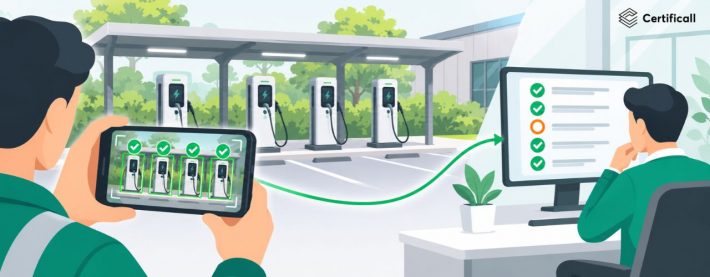
The same approach applies to other inspections. For EV charging stations, we analysed the 13 points of a typical site visit: twelve can be verified beforehand, and the visit focuses on what really requires it. The full analysis is in our article on EV charging station inspection. In insurance, remote risk surveys follow the same logic, as does construction progress evidence.
Remote inspection also has a natural European dimension. Thanks to the eIDAS Regulation, a photo certified in France carries the same presumption of date and integrity throughout the EU. The needs are the same everywhere: renovation subsidies, charging infrastructure, insurance, agricultural grants. Building on its experience with energy savings certificates, Certificall aims to become the European leader in remote visual inspection, alongside inspection bodies.
Checklist: choosing a remote visual inspection solution
Eight criteria to check
- In-app capture. No import from the gallery should be possible.
- Qualified time stamp. Issued by a qualified trust service provider under eIDAS.
- Reinforced geolocation. The position is cross-checked, not just declared.
- Qualified electronic seal. It guarantees the integrity and origin of each capture.
- Capture checklist. The inspector sets the points to photograph or film.
- Trust score. Each file receives a reliability rating.
- Analysis and report. Anomalies are flagged and the file can be used without re-keying.
- Archiving. Evidence is retained, remains enforceable and is hosted in Europe.
For energy savings certificate files, our time-stamped photo page for energy savings certificates presents the use cases, and our certification technology page details Certificall’s evidence chain.
Contact us to integrate Certificall into your business processes
A remote inspection checklist built with you, for your inspectors.
The questions we really get asked about remote visual inspection
- ❓ What is remote visual inspection (CVAD)?
- Remote visual inspection, known in France as CVAD, is a compliance check based on photos, videos or a video call captured on site, then analysed by an inspector who does not need to travel every time.
- ❓ Does remote visual inspection replace on-site visits?
- No. For checks that only require a look, an on-site visit is no longer necessary: a certified photo provides the same information. But on-site inspection cannot be removed entirely, and as a matter of principle it should not be: it remains essential for measurements, tests, areas that cannot be filmed and a sample of files.
- ❓ Is remote inspection a threat to inspection bodies and experts?
- No. Remote visual inspection is a tool for inspectors. It removes low-value trips, lets them handle more files and focus their expertise on the cases that need it. The decision and the technical judgement remain theirs.
- ❓ Why does remote inspection require certified photos?
- Because it increasingly relies on self-service capture: the person being inspected takes the pictures and may have an interest in cheating, for instance by photographing a screen. Certification at the moment of capture guarantees the date, place and integrity of each image, and feeds AI analysis tools with clean, traceable data.
- ❓ Does remote visual inspection have a legal basis?
- In France, yes for energy savings certificates: law no. 2025-594 of 30 June 2025 against fraud in public aid opened the way to remote visual inspections in the CEE scheme. In every sector and across the EU, the evidential value of a capture rests on its quality: a qualified electronic time stamp and a qualified electronic seal benefit from a legal presumption under the eIDAS Regulation.
- ❓ How much does remote visual inspection cost?
- With Certificall, a certified photo costs €1 excl. VAT per unit and down to €0.56 excl. VAT with an annual subscription, a certified video costs €3 excl. VAT, and a video-call inspection costs €5 per unit, with about twenty certified photos captured during the call. In the French CEE scheme, an on-site inspection costs €200 to €400 on average.
- ❓ Which app should be used for remote visual inspections?
- You need an app that certifies photos and videos at capture, with a qualified time stamp, geolocation and a qualified eIDAS electronic seal, that enforces a capture checklist and produces a file the inspector can use directly. Certificall provides these features, along with the CertiLink secure link to have evidence captured by someone on site without an account.